
There's always an alternative – if there wasn't, the other side wouldn't have to continuously repeat the lie that no alternative is possible.
Cory Doctorow -- pluralistic.net
Author: Josh Lepawsky
Video Talk: scale, magnitude, and action
This is a short talk I gave for an invitation to the Prada Frames “Materials in Flux” symposium.
Video Talk Series: electronics and waste
description
Video talk series: repair
“Is electronics repair a right? And if so, who needs it?” Electronics – Ecologies “Consumers’, advocates’, and resellers’ demands for a “Right to Repair” seems to be gaining broader acceptance. Policymakers around the world have […]

In My Opinion: Apple still has much to fix on repair
“Late in 2021, Apple announced that it would permit individual consumers to repair their own devices. This is welcome news for advocates who have been campaigning for years in the U.S., the EU, and elsewhere […]
Video Talk: Climate Change Induced Water Stress and Future Semiconductor Supply Chain Risk
The fourth installment of the ELECTRONICS – ECOLOGIES series, MANUFACTURING, was held at Nanyang Technological University in Singapore on Monday 4 December 2023. You can view the article discussed in this presentation via: Lepawsky, Josh. […]

No Electronics without semiconductors and no semiconductors without water
Without semiconductors there are no electronics and without sufficient water, there are no semiconductors. New research published in iScience provides a global analysis of semiconductor manufacturing locations and the projected future water stress they are […]

Social Scientist job in tech
The Social Media Collective (SMC), a research group at Microsoft Research Labs, is hiring a social sciences post-doc. As the SMC website states: This is an ideal opportunity for a new Ph.D. to conduct original […]
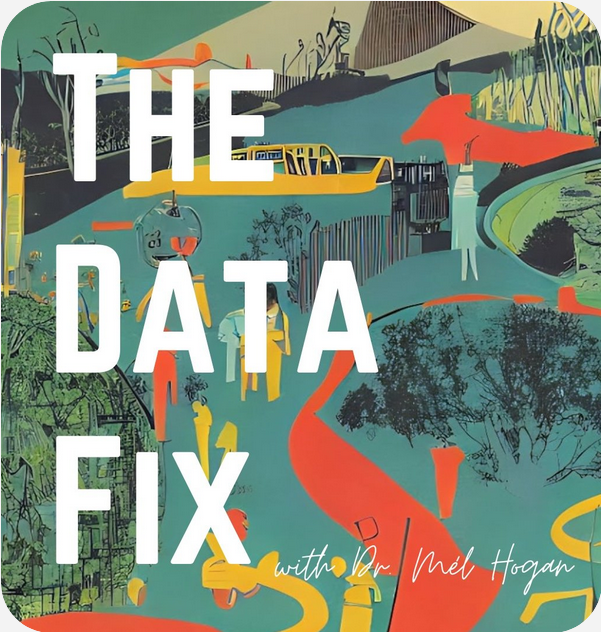
Mél Hogan’s Data fix podcast
Mél Hogan (@mel_hogan@mstdn.ca) is a professor of film and media studies who also produces the The Data Fix podcast. The podcast is a project arising from something perhaps ineffable that broke during the COVID pandemic. […]
MEMEX
This is an experiment in writing-as-thinking-on-the-go. It’s inspired by Cory Doctorow’s Pluralistic blog. It uses the library function of Zotero to create a publicly available ‘memex‘ of notes and writing for a notional public audience. […]


You must be logged in to post a comment.